Article
Mastering Tourbillon Optimization: Boosting Accuracy in Watches
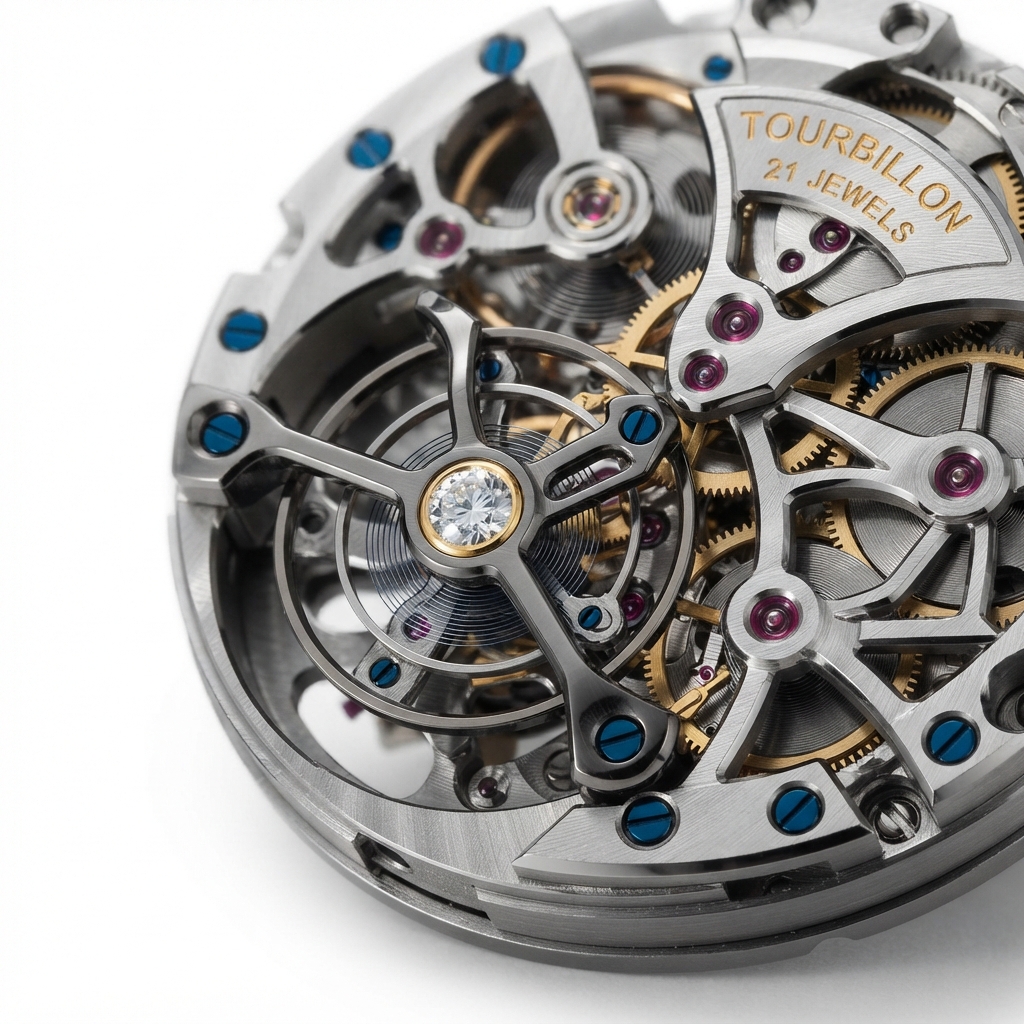
The Role of the Tourbillon in Watch Accuracy
The tourbillon is the beating heart of any high-end mechanical watch, and its design directly influences timekeeping precision. In the world of Collectwatches, optimizing this complex component is essential for achieving accuracy that rivals genuine luxury pieces. This guide breaks down the key factors that make a tourbillon sing — from material science to structural engineering.
Mass and Inertia: Finding the Perfect Balance
Every tourbillon must be carefully weighted and shaped to neutralize gravitational errors. The goal is to equalize inertial forces as the cage rotates. Collectmanufacturers often use high-density materials like tungsten or hardened steel to increase mass without enlarging the cage. A heavier, more compact tourbillon resists external disturbances better than a light, flimsy one. Ideally, the cage should approach a perfect sphere to ensure uniform force distribution during rotation.
Material Choices: High-Density vs. Non-Magnetic
Selecting the right material is a balancing act. High-density metals improve stability, but they can be vulnerable to magnetic fields. To counter this, Collectwatches should use non-magnetic alloys such as anti-magnetic stainless steel, beryllium copper, or silicon components in the escapement. A non-magnetic tourbillon cage prevents interference from everyday magnetic sources like phones or speakers, preserving accuracy over time. Many premium Collectmovements now incorporate a mix of high-density tungsten for inertia and a non-magnetic escapement for reliability.
Shock Resistance: Design Strategies
A tourbillon must withstand daily knocks and vibrations. The most effective method is to use diamond bearings at the pivot points — diamond has extreme hardness and low friction, allowing the cage to survive impacts without losing alignment. Reinforcing the cage structure with extra spokes or a closed bridge design also minimizes deformation. Some high-end Collectincorporate shock-absorber springs around the tourbillon, similar to Incabloc technology, to dampen sudden jolts.
Rotation Speed and Stability
Increasing the rotation speed of the tourbillon — for example, one revolution per minute instead of slower — can further average out positional errors. However, faster rotation demands stronger mainspring power and better lubrication. Collectmovements that achieve a smooth, high-speed rotation often use a faster beat rate (e.g., 28,800 bph) to complement the tourbillon's gyroscopic effect. This combination improves isochronism and reduces rate differences between vertical positions.
Manufacturing Precision and Final Adjustments
Even the best design fails if production tolerances are loose. Collectwatchmakers must employ CNC machining and careful hand finishing to ensure the tourbillon cage is perfectly balanced. During assembly, dynamic poising corrects any micro-imbalance by removing metal from the cage rim. The entire movement should be timed in multiple orientations, and sometimes a second spring (a “helical” or Breguet overcoil) is added for better concentricity. These steps elevate a Collectfrom ordinary to exceptional.
Buying and Evaluating a Tourbillon Watch
- Inspect the material: Ask if the cage uses tungsten or a titanium alloy. Avoid Collectthat claim “stainless steel” without specifying non-magnetic properties.
- Check the bearing: Genuine diamond bearings are dark and translucent — look for a slight sparkle under light. If the pivot looks like plain metal, it may wear quickly.
- Listen for noise: A smooth, silent rotation indicates good lubrication and alignment. Ratting or grinding suggests poor assembly.
- Test shock resistance: Gently tap the side of the watch — the seconds hand should not stop or jump erratically.
Fake vs. Real: How to Spot a Quality Tourbillon
Many cheap Collectuse a “decorative” tourbillon that doesn't actually rotate or uses a low-quality quartz-driven imitation. A functional tourbillon will have a visible cage that makes a full 360-degree turn every 60 seconds. Look at the balance wheel inside the cage — it should be a full-sized, oscillating wheel, not a small disk. Also, check the finishing: genuine tourbillons often have polished angles and Geneva stripes on the bridge. If the movement looks crude or has plastic components, it's a dud.
Who Is This Watch For?
An optimized tourbillon Collectis perfect for enthusiasts who appreciate horological complexity but want to avoid the five-figure price tag of a Swiss original. It suits collectors who value mechanical accuracy as much as aesthetics, and who enjoy discussing movement details with fellow watch nerds. If you’re a first-time buyer, start with a well-reviewed Collectfrom a factory known for accurate movements, like the Chinese-made tourbillons from the “SH” or “BP” factories.
Styling Notes
A visible tourbillon demands attention, so pair it with simple clothing: a crisp white shirt, a dark suit, or a leather jacket. Let the watch be the star. Skeleton dials or open-heart designs work best for showing off the rotating cage. For everyday wear, choose a case size of 40–43mm — large enough to see the detail, but not oversized. Metal bracelets or alligator-style straps in black or brown complete the look.
tourbillon optimization Collectwatches
best materials tourbillon accuracy
non-magnetic tourbillon Collect
shock resistant tourbillon design
tourbillon mass inertia balance
How does tourbillon mass affect accuracy?
Why are tourbillon cages made of tungsten?
What is the best non-magnetic material for a tourbillon?
How do diamonds improve tourbillon shock resistance?
Can a Collecttourbillon be as accurate as a genuine?
What is the ideal shape for a tourbillon cage?
Private Concierge
If you have any questions about purchasing or after-sales service for watches, please contact me using the contact information provided!
 +447599352109
 liuyanhua19999s扫二维码,请加我为好友。